
The PhD program I got rejected from, but you should apply anyway

Not to brag, but I have a pretty decent track record as a researcher, with scholarships and grants which add to my CV. But this rejection still hurts a bit.
The rejection I am talking about is by European Molecular Biology Laboratory (EMBL)’s PhD programme.
I jumped to apply for it in my 3rd semester of Erasmus master’s degree, thinking how can they reject a funded scholar with great grades and solid references. Well, uhm, they did.

Now I realize why: I was a chemistry student (both master’s and bachelor’s), desperate to switch to neurobiology. Such competitive programs are, well, competitive.
Why would they hire someone who knows how mass spectrometer works for an experimental project on mice brain?
There are so many great ways to switch fields (more on this in upcoming edition) in your career, but competitive programs like this one have a surplus of niche-specific candidates. So, it can be much easier to get rejected here.
However, if you have a solid background through degrees or internships, apply for sure. Even if you don’t, apply to understand your own research interests better.
Who knows, your application rejected here might end up working elsewhere.
Opportunity Digest
Why am I focusing on EMBL’s PhD program today?
You can apply for projects in 40 different fields!
..and there are multiple groups hiring in each. e.g., biochemistry, disease models, AI/ML, physics, mathematics, tissue engineering etc.
The money.
Two application rounds, one right now and another around January.
It’s a super prestigious place to be for quality research (hardly anybody questions work done by EMBL scientists bcoz it’s top notch). Read this blog to know more.
It’s located in 6 different sites, in five European countries (since Hamburg and Heidelberg are both in Germany).
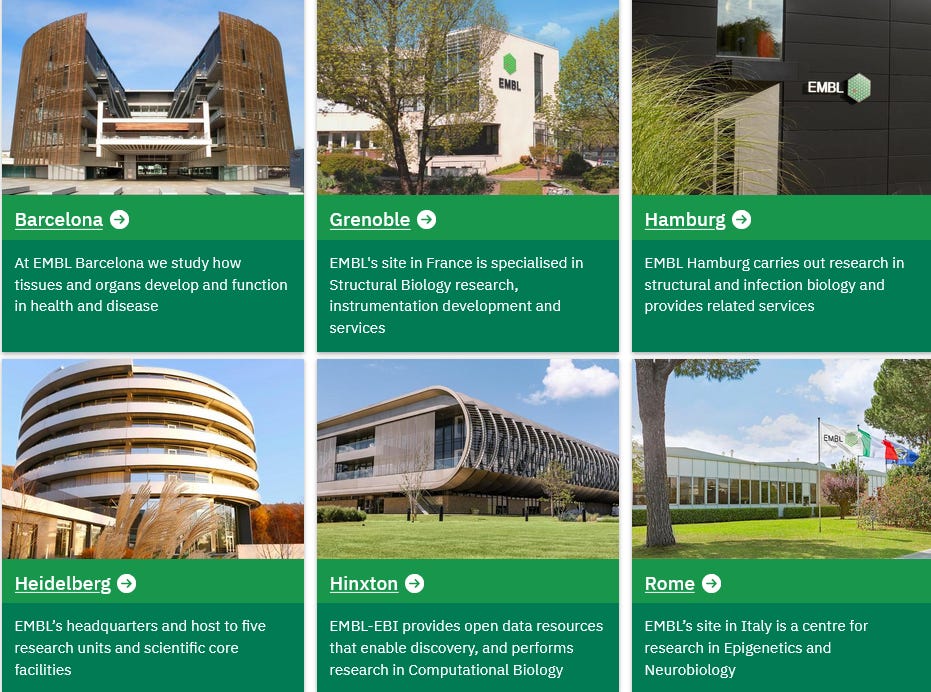
Super international crowd, so you won’t have to worry much about adjusting to that particular country.
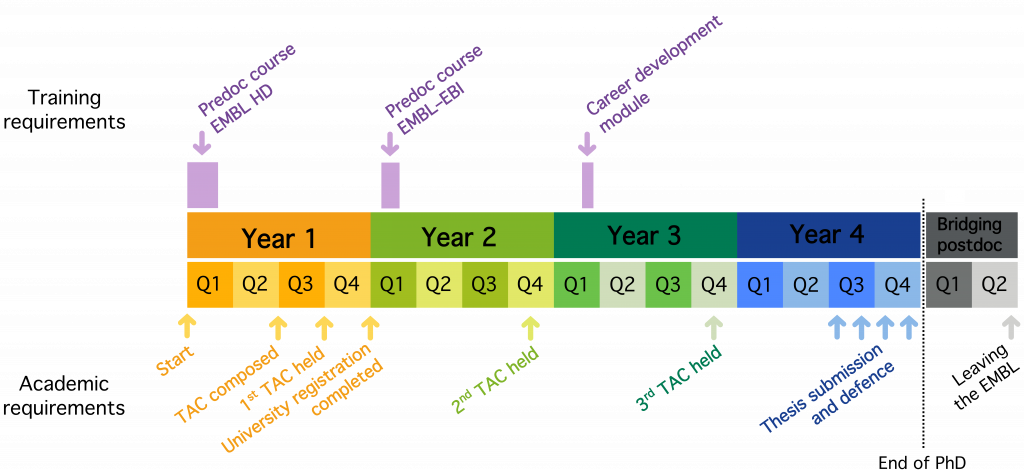
The structure of doctoral programme. There are multiple opportunities to upskill, you’ll have a TAC (= Thesis Advisory Committee), and chance to show your work in conferences.
Register here and start preparing your documents! Deadline: 13th Oct 2025.
Other opportunities (deadlines here):
Multiple jobs and Postdocs at EMBL across Europe (including the UK, multiple deadlines).
PhD positions in vaccine development (Germany, 5/10), photopolymerization (Switzerland, no deadline mentioned), breast MRI imaging (30/9), environmental microbiology (Switzerland, 3/10).
Postdoc positions in recycling plastic waste via mechanochemistry (Netherlands, 26/9), RNA immunoOncology (Poland, 29/9), RNA viruses (Poland, 30/9), structural biology of mRNA (UK, 6/10), CRISPR/Cas9 in endometriosis (UK, 28/9), RNA structure and function (UK, 7/10), protein complexes in motor neuron disease and dementia (UK, 6/10). {a lot of RNA topics this time!}
Head of service unit proteomics, Germany (30/09).
Multiple opportunities in human behaviour and environment lab (South Korea, 3/10).
Faculty openings at Birla Institute of Technology and Science (India, 5/10).
Research associate in biobased polymer composites (UK, 28/9).
Master’s thesis in low toxicity crosslinkers (Switzerland, no deadline).
Technical specialist in transcriptomics, tissue culture, etc. domain (UK, 1/10).
Internship in statistics in the Ministry of Statistics and Programme Implementation government (India, 30/9), AI-related topics in 7 different research groups (Germany, no deadline mentioned).
Don’t share this hack
When you know about application deadlines ahead of time, use it to gather the referees aka, the professors/scientists/teachers who are willing to testify how well-suited you are as a candidate.
Why?
Valuable referees are busy. They might reply to you in a week, two weeks, or a month. Earlier you reach out, the better.
You shouldn’t bombard them with your request right away! Email step-by-step: ask how they are → share your progress and future plans → ask for consent to be referee → share the list of programs with deadlines → send reminder to fill the forms
Filter out the “No, I can’t give you a reference sorry” replies which some of your choices might sent, to avoid rushing on deadline date (with panic ofc).
Random musings
The debate of AI being good or not will keep going, as we’re in the middle of this tidal wave of its development. But I have to agree, it has made expat life really, really easy.
Translation tools translate better. On phone, as browser plugin, and even on emails.
I know this might slow my Polish language progress, but it’s a relief to not do the extra homework to understand important info, especially sent by government or my institute.
And just understand the gist of the info that very moment.
An interesting article tells how Meta AI developed a model to automate translation in 200 (!) languages.